

Identify the finish
Check the project details or supplier's instructions. A shiny surface may be bare metal, plated, clear-coated or painted.
CANVAS DESIGNERS · METAL CARE GUIDE
Keep salt and surface dirt from building up. Start with gentle cleaning, identify the finish before using a polish, and know when a mark needs a closer look.
Stainless steelAluminumCoated finishes
 View photo ↗
START WITH THE METAL AND ITS FINISH
Identify the metal and its finish first. For routine care, use fresh water, a suitable mild cleaner and a soft cloth, then rinse away residue and dry the surface. Bare stainless steel, anodized aluminum and coated metal need different treatment for stubborn marks. Stainless steel resists corrosion, but salt deposits and trapped contamination can still cause staining or damage.
These are routine-care summaries. Follow the instructions for your exact metal, finish and assembled component. Protect nearby canvas, leather, clear windows, gelcoat, sealants and electrical equipment from cleaners and residue.
THE GENTLE ROUTINE
Begin with routine care. Stronger chemicals and polishing need to match the component, finish and surrounding materials.
Check the project details or supplier's instructions. A shiny surface may be bare metal, plated, clear-coated or painted.
Use fresh water to remove loose salt and dirt. Give sheltered undersides, joints and fittings attention without forcing water into sealed assemblies.
Use the mild method approved for that finish. Start with a clean, soft cloth or sponge and test any new cleaner in a small hidden area.
Remove cleaner residue and dry with a clean cloth. Look for recurring stains, pits, loose fittings or coating damage.
FROM OUR METAL COLLECTION
Original Canvas Designers examples show the details to consider. Confirm the material, finish and care instructions for your own component.
 View photo ↗
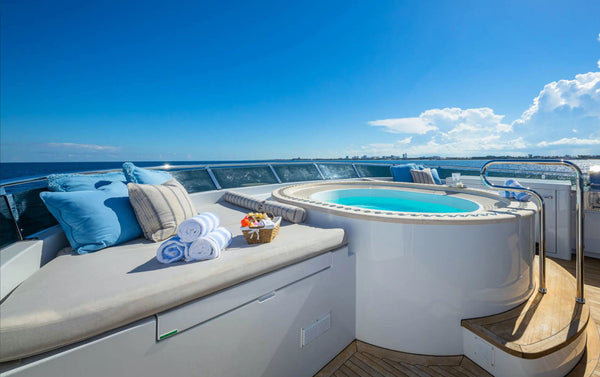
Look around steps, joints and sheltered surfaces when checking for deposits.
 View photo ↗
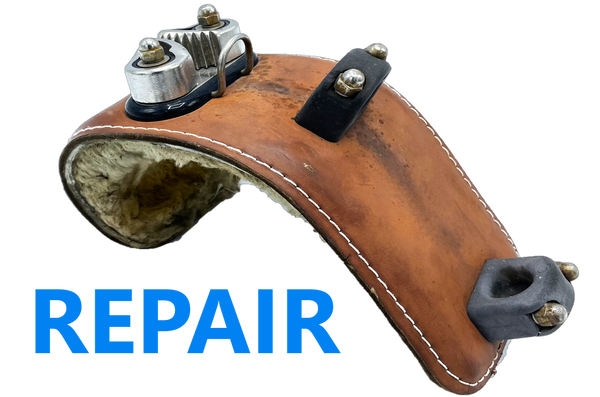
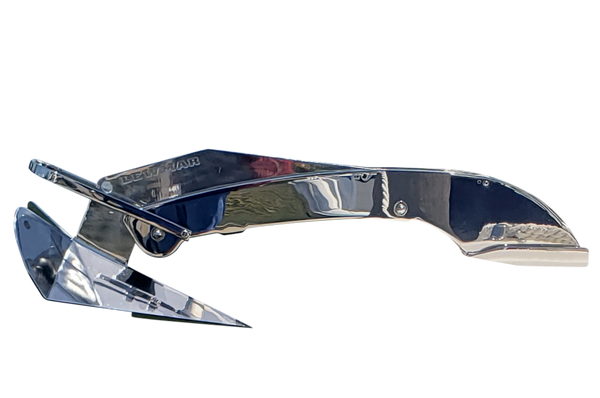
Preserve the existing finish. Keep grit and unsuitable abrasives away.
 View photo ↗
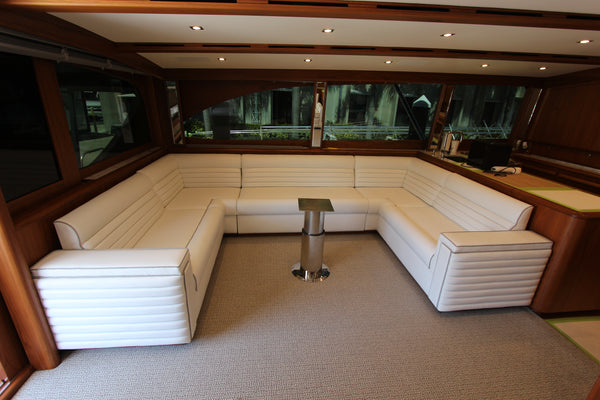
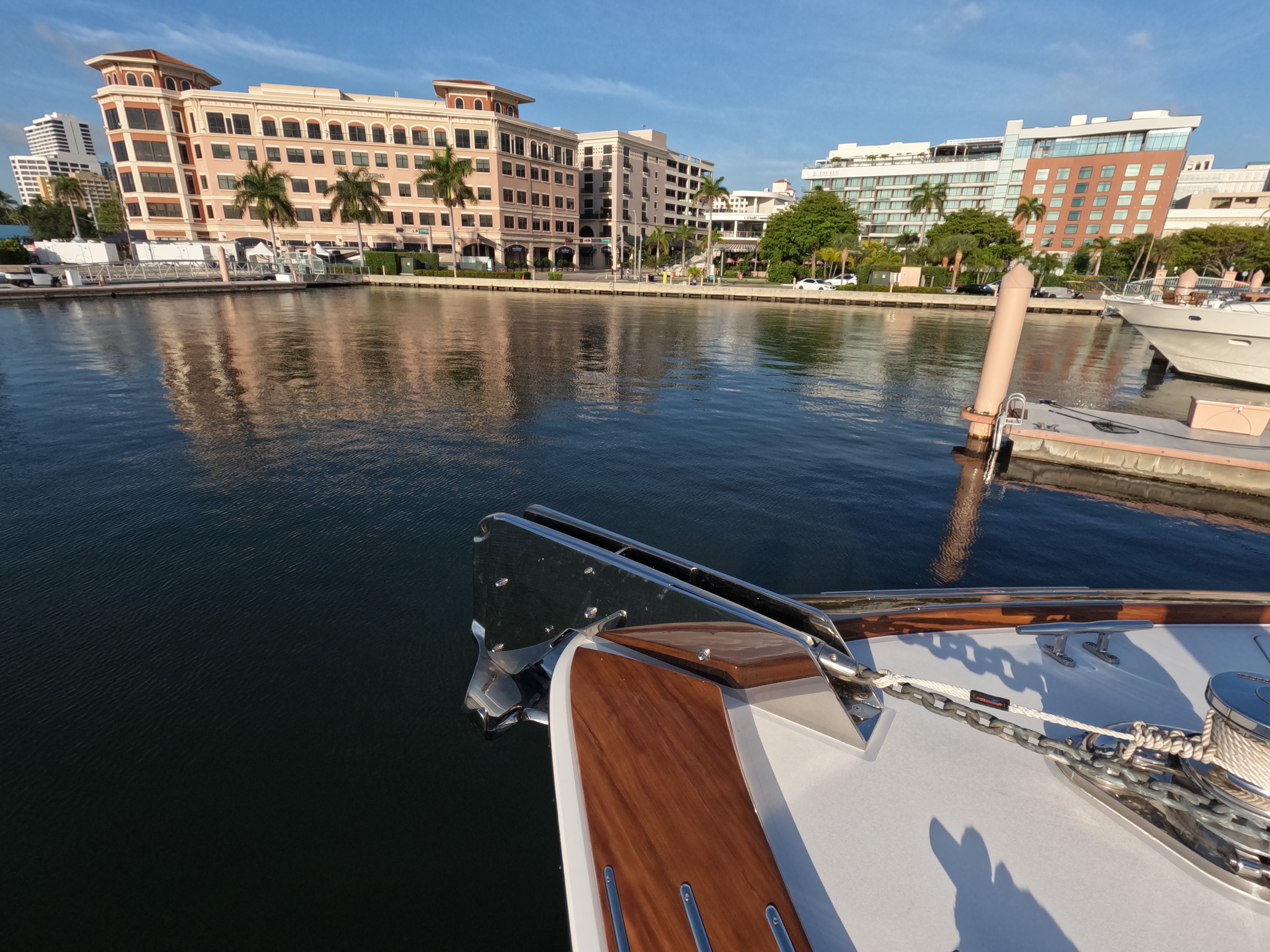
Protect surrounding finishes, sealants and fittings while cleaning metalwork.
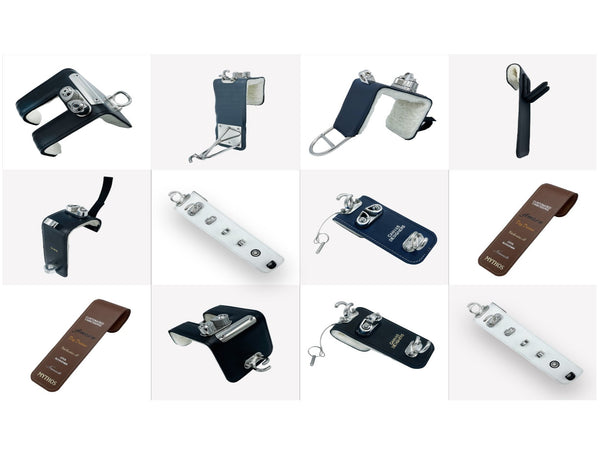
Rails, fittings and deck details each need care that suits the installation.
Explore our metal collection ↗THE FINISH CHANGES THE METHOD
Bare polished or brushed surfaces
Preserve the existing finish. Start with soap and water before considering a dedicated stainless cleaner.
Protect the finish. Avoid ordinary steel wool, contaminated scouring pads, bleach and hydrochloric-acid cleaners. They can scratch, contaminate or corrode stainless steel.
A protective anodized finish
Protect the anodized layer. A product intended to brighten bare aluminum may be unsuitable for this finish.
Protect the finish. Avoid strong acidic or alkaline cleaners, aggressive rubbing and unapproved metal polishes. Don't treat an anodized surface as bare aluminum.
Care for the coating first
Follow the coating supplier's instructions. Cleaning is intended to preserve the finish, rather than expose or polish the metal beneath it.
Protect the finish. Don't apply bare-metal polish, abrasive compounds or strong solvent cleaners without approval for the exact coating. A test patch doesn't establish long-term compatibility.
KNOW WHEN TO PAUSE
Surface color does not tell the whole story. Look at the condition of the finish, fitting and assembly.
Tea staining can occur on stainless steel in coastal conditions. Other brown marks can come from contamination. Begin with routine cleaning, then seek advice if the mark persists or returns. Color alone doesn't identify the cause.
These need more than cosmetic polishing. Stop using the affected component if its condition could affect safe operation and arrange a qualified assessment. A photograph cannot establish structural condition.
A damaged coating needs a finish-specific review. Don't sand, strip or polish it before the supplier confirms the appropriate repair method.
BEFORE YOU REACH FOR A POLISH
Clear answers about stainless steel, fingerprints, coastal staining and finish compatibility.
Ask a care question ↗Yes. Stainless steel is corrosion resistant, not maintenance free. Salt deposits, surface contamination, poor drainage and unsuitable exposure can lead to staining or corrosion. Regular cleaning helps, but recurring marks need their cause reviewed.
Tea staining is brown surface discoloration caused by corrosion in coastal conditions. It is usually a cosmetic issue, but a brown mark is not enough to diagnose it. Pitting, cracks, persistent staining or a suspect fitting should be assessed separately.
For bare stainless steel, begin with mild detergent, warm water and a clean soft cloth. Rinse and dry. On brushed finishes, follow the grain. If the part has a coating, follow that coating's instructions before trying any stainless cleaner.
Avoid bleach, hydrochloric-acid cleaners and ordinary carbon steel wool for routine care. Chloride-containing cleaners can stain or pit stainless steel. Steel wool can leave scratches and iron particles that later rust.
Use the mild cleaning method for your exact finish first. Brake cleaners vary in chemistry and are not a general marine-metal recommendation. Baby powder is unnecessary for routine fingerprint removal. For grease that remains, confirm a compatible product with the component or finish supplier.
Check the product label and exact finish. A polish suitable for bare stainless steel or bare aluminum may damage anodizing, paint, a clear coat or a powder coating. Don't polish an unknown finish or try to remove pitting by rubbing harder.
Use the component or finish supplier's schedule and adjust for salt exposure and buildup. Rinse deposits after saltwater exposure and inspect sheltered joints and undersides. There isn't one polishing interval suitable for every metal, finish or fitting.
Ask before using stronger chemicals when the finish is unknown or routine cleaning leaves a recurring mark. Pitting, cracks, loose fasteners, binding parts and coating failure need assessment. Share clear photographs, the component's location and any project details with Canvas Designers to discuss the next step.
LET’S LOOK AT YOUR QUESTION
Share clear photographs, the part's location and any project paperwork. Our Riviera Beach team can discuss your question and the information needed next.
Contact Canvas Designers ↗Care references checked October 20, 2026. These summaries help you find a suitable routine-care reference. They do not identify the metal, finish or structural condition of a particular part.
We appreciate you taking the time to look at our products. It is our honor to serve the marine community since 1985.
CONTACT US
1500 Australian Avenue
Riviera Beach, FL 33404
T: 561-848-2111
F: 561-848-2148
Map 1500 Australian Ave, Riviera Beach, FL 33404, United States