


Best Fabric for Boat Seats and Marine Upholstery
Few pieces of upholstery work as hard as a boat seat. It bakes in direct sun, gets soaked by spray and rain, collects sunscreen and fish oil, and is sat on by people in wet swimsuits. Finding the best fabric for boat seats is less about appearance and more about how a material holds up after many seasons on the water.
This guide covers what marine upholstery fabric has to withstand, how the common materials compare, and why foam, thread and construction matter as much as the fabric itself. The advice reflects the questions boat owners often raise with a marine canvas and upholstery shop like Canvas Designers, which has served boaters in Riviera Beach, Florida, since 1985.
Why marine upholstery fabric differs from household fabric
Furniture fabric is designed for a calm indoor setting. A boat offers the opposite. Ultraviolet light breaks down fibers and fades dyes, moisture invites mildew into the cushion, salt works its way into seams, and temperature swings stress every material. Add shoes, buckles, tackle and pets, and the demands multiply.
Marine upholstery fabric is therefore judged on a short list of qualities: UV stability, water resistance, mildew resistance, abrasion strength and ease of cleaning. A material that is weak in any one of these tends to be the first part of a seat to fail.
What to look for in boat seat fabric
UV resistance and colorfastness
Sunlight is the leading cause of early fabric failure. Look for materials with UV inhibitors built into the finish, or fibers that carry their color all the way through, as solution-dyed acrylic does. These hold their color far longer than fabrics dyed only on the surface. If your boat spends long hours in strong sun, treat this as the first requirement on your list.
Water and mildew resistance
No seat stays dry forever, so the aim is to shed water fast and prevent mildew from settling in. Vinyl blocks water at the surface. Woven fabrics such as acrylic repel water and dry quickly because they breathe. Mildew-resistant treatments help, but airflow and drying time still do much of the work.
Abrasion and tear strength
Helm seats, bow seating and cockpit benches are rubbed constantly. Manufacturers often publish abrasion ratings, and a higher figure generally indicates a longer-lasting surface. Strong seams and reinforced stress points matter just as much as the face fabric.
Comfort and surface temperature
Dark vinyl in full sun can become too hot to sit on, while woven fabrics tend to stay cooler and feel softer. Lighter colors reduce heat in either material. If passengers sit for long stretches, comfort deserves as much weight as durability.
Common fabric options for boat seats
Marine-grade vinyl
Marine vinyl is a coated fabric made specifically for boats. It wipes clean, resists water and comes in many textures and colors, which explains its popularity for seating, bolsters and helm chairs. Quality varies, so look for UV inhibitors, a mildew-resistant finish and a cold-crack rating if the boat sees low temperatures. The trade-offs are heat retention and the lack of breathability, which can trap moisture when foam or seams are poorly chosen.
Solution-dyed acrylic
Solution-dyed acrylic, the family that includes Sunbrella fabrics, is a woven textile in which color is added before the fiber is formed. Because the color runs through the fiber, it resists fading, and the weave breathes so cushions dry faster. It is common for exterior cushions, covers and shade products. It is water repellent rather than fully waterproof, so it pairs best with foam that drains well. Canvas Designers lists Sunbrella Horizon among the materials it uses for upholstery covers.
Performance leather alternatives
Some manufacturers produce upholstery materials that look and feel like leather while coping with marine conditions. Ultra Leather is one example, and Canvas Designers also names it among its upholstery materials. These suit salons, helm seating and spaces where a refined look matters. Before choosing one for an open deck, confirm that the specific product is rated for outdoor exposure.
Coated polyester
Polyester is strong and usually less expensive, but uncoated polyester has weaker UV resistance than acrylic. PVC-coated polyester is common for covers because it is waterproof, though it is less common as a seat surface. For seating, acrylic and marine vinyl are usually the stronger choices.
Fabric comparison at a glance
This table summarizes how the main options compare for typical boat seat use.
| Fabric Type | Key Benefits | Potential Drawbacks | Best Applications |
| Marine-Grade Vinyl | Easy to clean, water-resistant, and available in various finishes. | Can retain heat and offers limited breathability. | Helm seats, bolsters, and bow seating. |
| Solution-Dyed Acrylic | Excellent fade resistance, good breathability, and a soft feel. | Repels water but is not completely waterproof. | Exterior cushions, protective covers, and shaded seating areas. |
| Performance Leather Alternative | Provides a premium appearance and a comfortable seating surface. | Requires verification of its outdoor suitability and weather resistance. | Boat salons, helm seating, and covered areas. |
| Coated Polyester | Durable, cost-effective, and waterproof when properly coated. | May offer lower UV resistance and less comfort than other upholstery fabrics. | Protective covers and utility applications. |
Foam, thread and construction matter too
A durable fabric can still fail if what lies beneath it is wrong. Standard foam holds water like a sponge, which keeps cushions damp and encourages mildew. Marine foam that drains quickly lets water pass through, so seats dry out after rain or washdown. Canvas Designers uses EZ Dri foam for this reason and notes that water passes through it faster than through standard foam.
Thread is another weak point. Ordinary cotton or nylon thread breaks down in sunlight, so seams can open long before the fabric wears out. UV-resistant marine thread keeps seams intact. Drainage details such as vent holes or breathable bottoms help moisture escape. Pattern stitching is mainly a design choice, though it gives seats a more finished look, and Canvas Designers offers 52 custom CNC stitched patterns on its upholstery covers.
Interior and exterior upholstery are different jobs
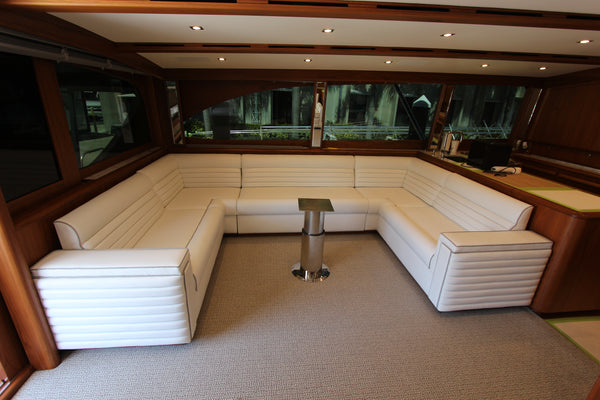
Cabin and salon upholstery is shielded from direct sun and spray, so comfort, appearance and stain resistance often come first. Exterior seating faces the full range of weather and needs stronger UV and water performance. Many owners use a tougher material outdoors and a softer, more decorative one inside. The interior boat upholstery work Canvas Designers shows is a useful reference for what cabin projects can involve.
The same fabric thinking applies to custom boat covers. Covers protect the seating beneath them and face the same sun, so UV resistance and fit matter there too.
Common mistakes when choosing boat seat fabric
- Choosing by color or texture alone. A deep, dark vinyl may look excellent in a showroom and be too hot to sit on at anchor.
- Using fabric labeled "outdoor" without checking marine performance. Patio fabrics are not always built for constant salt, sun and moisture.
- Ignoring foam and thread. The face fabric gets the attention, but foam and thread often decide the lifespan.
- Skipping drainage. Sealed cushions with non-draining foam hold water and develop mildew.
- Overlooking cleaning needs. Heavily textured surfaces can trap dirt in their grooves and take more effort to clean.
How cost and lifespan relate
Material price is only part of the cost. A cheaper fabric that fades or cracks early costs more over time than a better material that lasts several more seasons, especially once labor to remove and reinstall the upholstery is added. Labor is often a significant share of any reupholstery project, so it pays to choose durable materials the first time. Ask for a breakdown of materials, foam and labor so that quotes can be compared fairly.
How to choose the right fabric for your boat
- Identify where the seat is used. An open deck, a covered cockpit and a cabin place different demands on a fabric.
- Rank your priorities. Fade resistance, ease of cleaning, softness and budget rarely all point to the same material.
- Consider color. Lighter shades stay cooler and show fading less.
- Ask about foam, thread and drainage, not only the face fabric.
- Request a sample. You can ask a marine upholstery specialist about fabric samples and view them in daylight before you decide.
- Think about maintenance. A fabric you can keep clean is a fabric that lasts.
How to care for marine upholstery
Even the best marine upholstery fabric lasts longer with basic care. Rinse off salt regularly, clean spills promptly, and let cushions dry fully before covering or storing them. For fabric and canvas, a hose and a soft bristle brush are generally recommended over machine washing. These marine upholstery care and maintenance tips cover cleaning guidance for different materials. A cover over idle seating also cuts UV exposure considerably.
Frequently asked questions
What is the most durable fabric for boat seats?
There is no single winner. Marine-grade vinyl is durable and easy to clean, while solution-dyed acrylic resists fading and feels cooler. The better choice depends on sun exposure, how the seat is used and how much maintenance you are willing to do.
Is vinyl or fabric better for boat seats?
Vinyl suits seats that get wet often and need quick wipe-downs. Woven acrylic suits owners who want a softer, cooler surface and strong fade resistance. Many boats use both in different areas.
Are Sunbrella fabrics waterproof?
Sunbrella fabrics are water repellent and breathable rather than fully waterproof. This helps cushions dry, but it also means the foam beneath should drain well.
How long does marine upholstery last?
Lifespan depends on the material, sun exposure, construction and care. Faded color, a brittle or cracked surface, open seams and persistent mildew odors are the usual signs that it is time to replace.
Can I machine wash boat seat cushion covers?
Shops and manufacturers generally advise against it. Cleaning with a hose and soft brush is gentler on fabric, foam and stitching, and the covers should always dry completely.
Plan your boat upholstery project
If you are planning new seating or recovering existing cushions, a conversation about how your boat is used and where it is kept helps narrow down the right fabric. You can request a marine upholstery quote from Canvas Designers to discuss materials, foam and construction for your project.